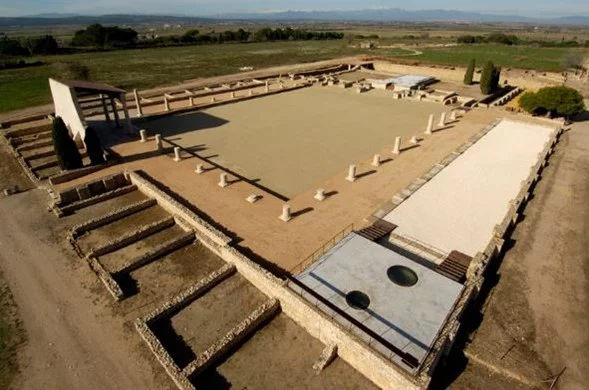
One of the most significant historical and cultural heritage sites in the Mediterranean is the Roman Forum of Empires, located in southern Roses Bay, Spain. This archaeological restoration has recovered one of the most important spaces within ancient Rome. In Roman cities, the Forum was a key social hub, serving as the center for the city’s political, economic, religious, and judicial activities. Forums functioned as open central areas surrounded by buildings with various purposes.
Archaeological excavations of this site, which covers approximately 10,000 square meters, continued from 1900 to 2000. After the excavation concluded in 2001, a decision was made to restore and reconstruct the area, preparing it to become a museum.
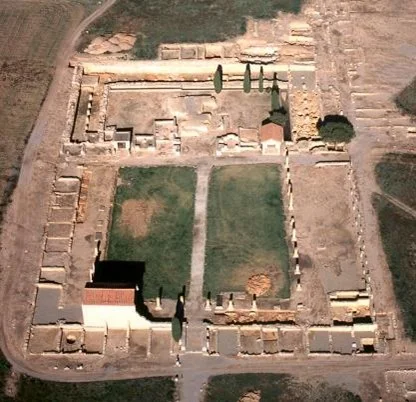
Before beginning the restoration project, a team of architects and archaeologists conducted a thorough analysis to identify the key issues of the site. Following this, the project guidelines were established:
- One major issue was that visitors were unable to recognize the areas, spaces, and buildings that constituted the forum.
- Another problem was the inaccessibility of certain interior spaces of the forum due to safety concerns and poor conditions.
- Accessibility problems and the lack of pathways inside the forum were also noted. The forum space was rendered inaccessible due to uneven surfaces created by previous archaeological operations and soil erosion caused by rain, making it dangerous in some areas.
Key Objectives Derived from the Guidelines:
- Preservation and conservation of the archaeological remains.
- Providing accessibility, making the site of the forum understandable and visitable.
- Fostering close collaboration between archaeologists and architects to achieve the above goals.
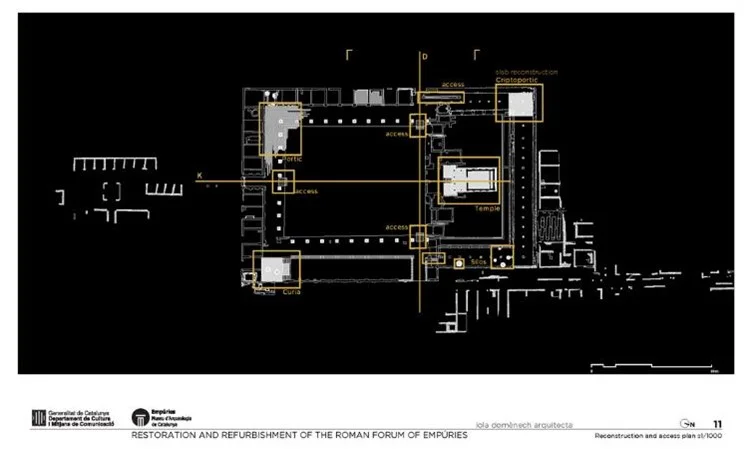
Actions Taken by the Team for the Project Implementation:
- Demolition of all inaccurate reconstructions from earlier archaeological interventions to preserve the value of the original ruins.
- Stabilization, repair, and reconstruction of certain archaeological structures based on guidelines provided by the archaeologists.
- Restoration of the original floor levels and showcasing the interactions between the various spaces that form a forum.
- Highlighting the symbolic architectural features of the Roman forum by differentiating the horizontal paved surfaces in each space, distinguishing them from others.
- Establishing clear pathways for visitors within the site.
- Creating new entry points for visitors along former roads (East-West and North-South axes), emphasizing the Cartesian order of the forum.
- Visitors can now clearly discern the relationships between the different spaces that make up the forum. The project aims to reconstruct the organizational structure of a Roman city.
- Special attention was given to the materials, techniques, and solutions designed for the project, consistently aiming to create a dialogue between the original ruins and the new structures, avoiding any form of false reproduction.
- This project is a combined effort of archaeology, architecture, and landscape design, respecting the history and landscape of the site throughout its execution
Lessons Learned from This Project:
- Avoid leaving archaeological sites neglected after excavations.
- Adopting a landscape-focused approach to such sites, as they are landmarks of historical and cultural landscapes with undeniable influence on the historical and cultural narratives of any society.
- Emphasizing the importance of interdisciplinary collaboration and recognizing the cross-disciplinary nature of landscape architecture.
- Acknowledging the prominent role of landscape architecture in interpreting historical sites.
- Reflecting on the importance of public spaces in the past, as illustrated by this forum.
- Adopting a holistic management perspective on interdisciplinary issues to ensure the successful achievement of project goals.
- Balancing the degree of intervention: neither excessive, which could detract from the site’s historical authenticity, nor too minimal, leaving the interventions unnoticed.
The use of contrasting techniques was employed to enhance the legibility of the forum site, given that one of the project’s main objectives was to make the space more comprehensible for visitors.
Modern materials and techniques, such as skylights that channel natural light from the ground to the lower levels, were introduced to enhance the visitor experience. These methods not only improve the viewing process but also evoke curiosity, creating perspectives that narrate the passage of time from the Roman era to the present.
Considerations for Improvement:
- The project could have benefited from addressing nighttime landscape design and artificial lighting, which is notably absent. While it’s important to appreciate the play of natural light and shadows on architectural elements, the allure of these historical sites at night should not be overlooked. However, addressing this aspect requires careful consideration of issues such as ensuring nighttime safety, the potential harm of artificial light on historical structures, and the effects on nearby wildlife and plants.
- Insufficient protection of certain well-preserved elements, like some of the pavements, is evident from the provided images, which clearly highlight these shortcomings.
- Moreover, a recreational space near the forum would have been beneficial, allowing visitors to spend more time engaging with the historical site. Such facilities could have strengthened the connection between the social function of the forum in the past and its role in the present.
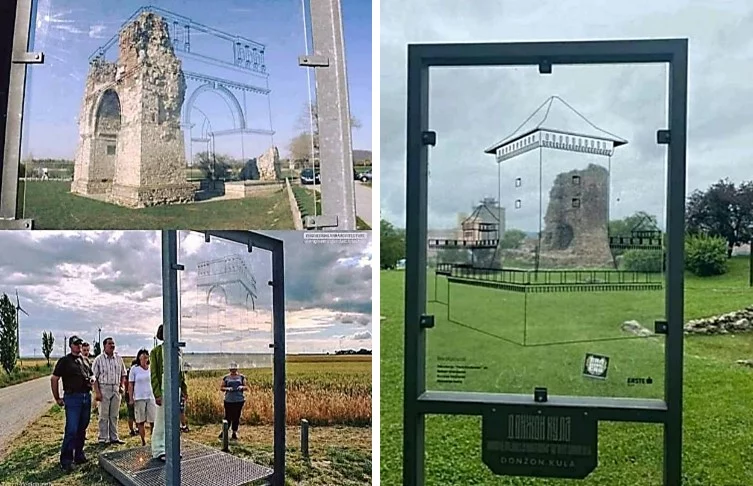
- The project could have also made use of completed perspectives of the entire complex to illustrate what the site might have looked like in its prime, enhancing visitors’ understanding of the forum.
Conclusion:
The management of historical and cultural sites after archaeological excavations is crucial. The increasing involvement of landscape architecture in recent years has transformed how we utilize and interact with these sites. These historical sites have undeniable strategic importance in terms of tourism and economics for their neighboring urban or rural areas, making the design approach, degree of intervention, and execution critical.
Despite its shortcomings, this project serves as a highly informative case study in terms of team collaboration, management perspectives, and levels of intervention. It can be seen as a successful example in this field, offering valuable insights for future projects.
Given the abundance of historical and archaeological sites in our country, we can hope that, with the continued growth of landscape architecture in Iran, we will soon witness similar projects in our own cultural heritage sites.